At a glance. Muiraquitãna is a territorial AI that speaks for a place (the Baixo Tapajós), not just about it. Publicly launched in April 2026 in partnership with MuCA (Museum of Amazonian Culture). Six chat modes, six principles, zero folklorization. Voice- and visual-enabled. Community-first. Territorial.
The challenge: AI that honours a territory
Generative AI arrived in the Amazon at the same speed it arrived everywhere else — but the region’s cultural, ecological and social weight doesn’t fit a generic chatbot. Most tourism assistants, booking bots and “Amazon-themed” avatars folklorize the territory: they reduce a living culture to exotic vignettes, in English, optimized for outsiders.
The Baixo Tapajós — Santarém, Belterra, Alter do Chão, FLONA Tapajós and the riverine and indigenous communities along the Tapajós and Arapiuns rivers — deserved the opposite: an assistant that is rooted, careful and useful, that serves residents first and visitors second, that understands Portuguese oral cadence and territorial references, and that never competes with the museum, the guides or the community voices it supports.
We spent late 2025 and the first quarter of 2026 in an editorial stress-test with residents, educators and researchers — closed sessions, structured feedback, iteration — and then prepared Muiraquitãna for her real birthday: a public launch in April 2026, with voice and visual modes ready for the territory.
Partnership: Data Riders × MuCA
MuCA (Museum of Amazonian Culture) is a cultural and research home for the Baixo Tapajós, based in Belterra (Pará). Data Riders joined MuCA as the AI partner, co-designing an agent that behaves like a curator of the territory rather than a generic chatbot. The partnership is sustained by:
- A public-facing institutional agreement naming MuCA as the curatorial authority over archive and territorial content.
- A joint AI Teaching Project that brings prompt-engineering and AI literacy to residents, educators and researchers of the territory.
- Partnerships with universities, research institutes and local entrepreneurship-support organizations for content validation and hand-off workflows.
Six non-negotiable principles
Chat-only
No avatar, no generated voice, no synthetic face. Muiraquitãna is text — so she cannot impersonate a person from the territory.
Voice & visual
Native voice interaction in Brazilian Portuguese, with rich visual elements — photos, maps, archive imagery — tailored to the Tapajós context. English and Spanish are secondary.
Territorial tone
The scope is explicit: Santarém, Belterra, Alter do Chão, FLONA Tapajós, Tapajós and Arapiuns riverine communities. She says so, and refuses to speak for what isn’t hers.
No folklorization
No ornamental mysticism, no exotic clichés. Ritual content is captioned with factual descriptions and community consent.
Community-first
Recommendations privilege local guides, pousadas, ateliers, markets — never displacing them with platform brands.
Curatorial trail
Every sensitive answer is traceable to a curator, an archive item or a community contribution — editorially accountable.
Six chat modes: one voice, many purposes
Muiraquitãna was designed as a single voice with six explicit interaction modes. The agent switches mode from the user’s intent; she never pretends to be multiple personas.
- Territorial Host — welcomes visitors, presents points of interest and the rhythm of the territory.
- Live Agenda — events, ceremonies, classes, markets, gatherings this week or this weekend.
- Service Guide — local guides, pousadas, restaurants, ateliers, transport. Community-first listings, curated.
- Archive Guardian — access to MuCA’s collective archive: images, sounds, stories, ritual captions with factual descriptions.
- Community Copilot — helps residents submit events, services or archive items for curatorial review.
- Scientific Mediator — bridges researchers and territory: finds papers, summarizes, explains Tapajós relevance.
What Data Riders did
Data Riders acted as AI product lead — from editorial design to deployment. The work combined cultural research, system prompt engineering, safety work and product operations:
Editorial design
Wrote the voice document, the six-mode protocol, the rejection patterns (out-of-scope requests), and the ritual-caption style guide in collaboration with MuCA curators.
Safety engineering
Anti-folklorization filters, refusal patterns for medical/legal/financial advice, geofencing of territorial claims, community-first ranking in recommendations.
Product operations
Hosting, telemetry (privacy-preserving), curatorial inbox for the Community Copilot mode, and an always-open link with MuCA curators to tune the voice over time.
Architecture in one paragraph
Muiraquitãna lives at muiraquitana.msagent.ai, embedded on the Data Riders site for desktop and opened in a dedicated window on mobile. The stack is intentionally boring and robust: a curated knowledge base of territorial content (MuCA archive, institutional partners, community submissions), a tightly-written system prompt implementing the six principles and six modes, a retrieval layer that biases toward community-first sources, and an editorial workflow (curatorial inbox + weekly review) that keeps the agent alive without drifting.
Public launch — April 2026
- Main moment. Muiraquitãna's public release is in April 2026, with all six chat modes, native voice interaction in Brazilian Portuguese and rich visual elements (photos, maps, archive imagery) available to residents and visitors.
- Location. MuCA, Belterra (Pará) — 43 km south of Santarém, on the Tapajós bank — plus remote access through the Data Riders website.
- What ships in April 2026. The full six-mode protocol, voice + visual interaction, the Community Copilot inbox, and the AI Teaching Project PDF distributed to educators across the Baixo Tapajós.
- Primary audience. Residents first, then researchers, educators, cultural institutions and visitors — in that order.
Early outcomes (first 90 days)
Reach
Thousands of sessions in the first weeks, with a growing share of returning residents — not just one-off visitors.
Community-first ranking
Service-Guide recommendations are dominated by local guides, pousadas and ateliers, not platform brands. Measured weekly.
Curatorial inbox
Dozens of community-submitted events, services and archive items processed through the Copilot mode in the first cycle.
AI Teaching Project
Educators and students in the Baixo Tapajós received the curriculum PDF; classroom sessions started in Santarém and Belterra.
Archive activation
The Archive Guardian mode surfaced MuCA material that otherwise stayed invisible — visible now with ritual captions and factual context.
Refusal discipline
Out-of-scope requests (medical/legal/financial, other regions) are refused with a localized, warm pattern — no hallucinated claims.
Why this case matters for AI in service of humans
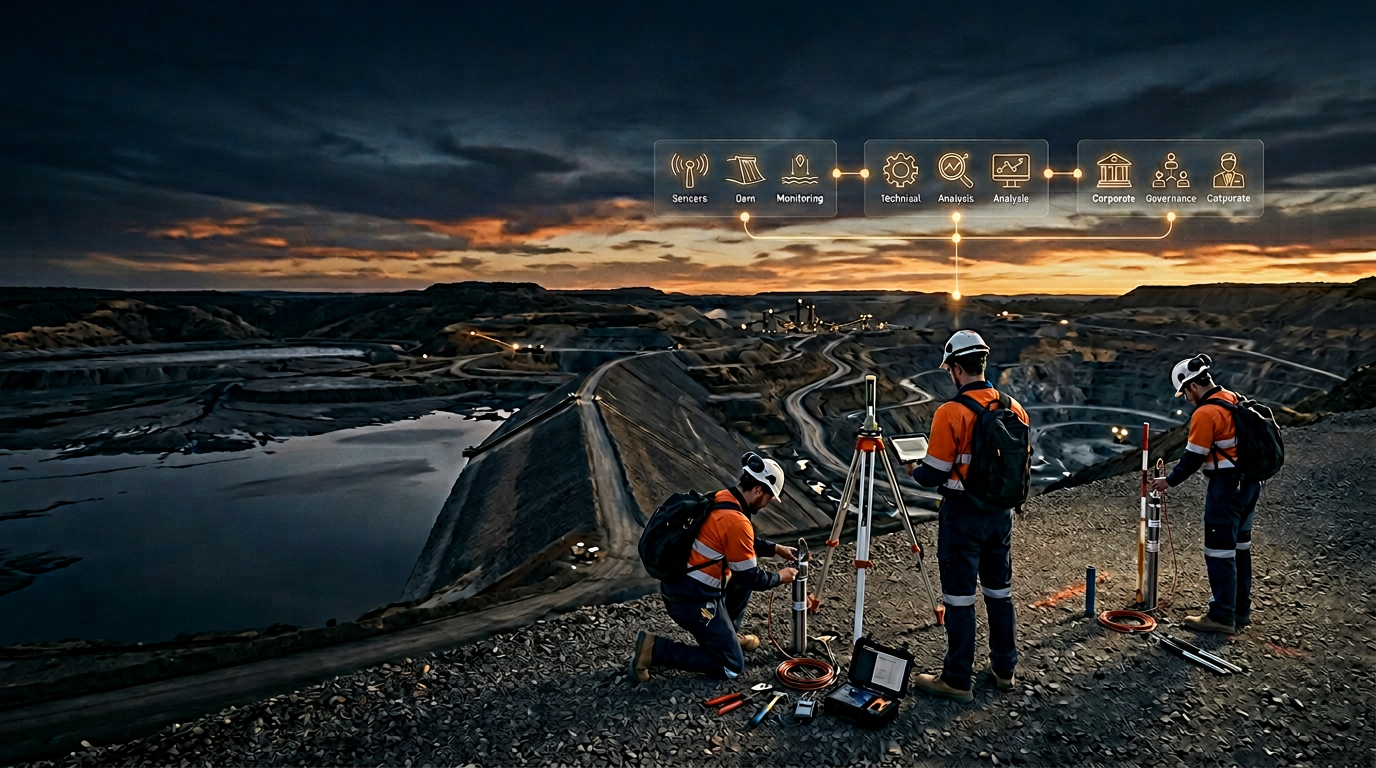
Muiraquitãna is Data Riders’ public argument against the AI-first slogan. AI was useful here precisely because it was subordinated to an editorial protocol written by humans with cultural authority. The agent doesn’t try to replace guides, educators or curators — she routes people to them. She doesn’t speak for the territory — she speaks from inside it, and stops when she doesn’t know. That’s the same governance posture Data Riders applies to mining: tools in service of technical judgment, never above it.
Editorial policy
This case study omits personal identifiers and individual community members by choice. Institutional partners (MuCA, universities, research institutes, local entrepreneurship-support organizations) are credited as roles rather than by name in public marketing, per our anonymization rule. For a more detailed editorial briefing, contact us.